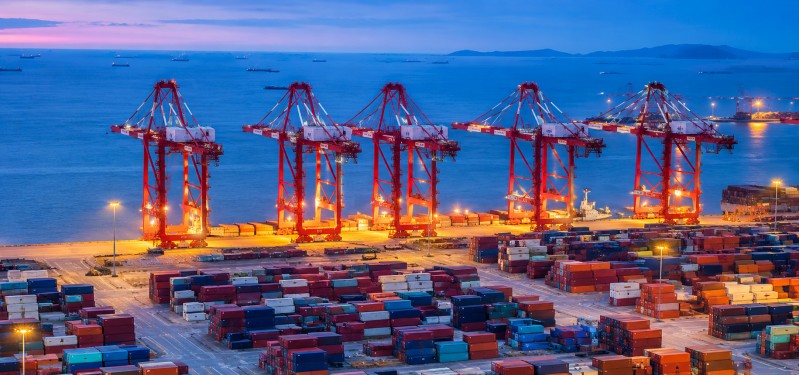
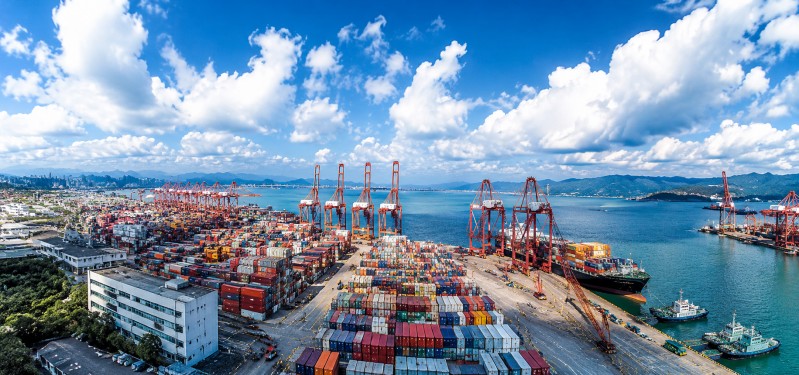
If you walk into a large port, you may notice rows of neatly arranged "covers" on the ground—these are cable trench covers. They may seem unremarkable, but they serve as the "invisible guardians" that ensure the safe transmission of power and signals throughout the port.
Port operation areas are filled with numerous power cables and control signal cables, which bear the critical responsibility of supplying power and transmitting commands to essential equipment such as quay cranes, yard cranes, and gantry cranes. These cables are typically laid in cable trenches beneath the ground. Cable trench covers are the first line of defense, covering the trenches and protecting these cables.
So, what specific value can cable trench covers bring to port engineering? Let's take a closer look.
I. Special Requirements for Cable Trench Covers in Port Operating Conditions
The port environment is fundamentally different from ordinary municipal engineering, imposing demanding requirements on cable trench covers from three dimensions. SINCHOLD's product design is engineered to address these specific challenges one by one.
1. High Salt-Spray Corrosion – SINCHOLD Responds with 316 Stainless Steel Troughs
The salt spray in marine environments is highly corrosive to metals. Ordinary carbon steel or cast iron cable troughs can severely rust within just two to three years in a port environment, losing their load-bearing capacity or even becoming impossible to open, leaving cables without protection. As a result, port engineering is increasingly adopting 316 stainless steel as the base material for cable troughs. SINCHOLD's cable troughs are made of 316L stainless steel with a wall thickness of up to 3mm. Compared to ordinary stainless steel, 316L contains molybdenum, which significantly enhances its resistance to pitting and crevice corrosion in salt-spray environments—meaning that in the highly corrosive atmosphere of a port, the service life of the cable trough is greatly extended, reducing the frequency of maintenance and replacement, and lowering the total lifecycle cost.
2. Heavy-Duty Repeated Rolling – SINCHOLD Responds with Double-Layer Nylon-Reinforced Covers with Embedded Steel Cables
Port operation areas frequently see heavy equipment such as container trucks (with a total weight of dozens of tons), rubber-tired gantry cranes, and forklifts passing repeatedly. The covers must withstand not only static weight but also the dynamic impact and fatigue loads from frequent traffic. If a cover fractures due to insufficient strength, not only will the cables be directly exposed to rolling pressure, but the sharp edges of the broken cover may also cut or pinch the cables, causing short circuits or even fires.
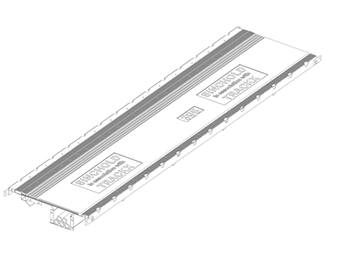
SINCHOLD's covers are made of double-layer nylon-reinforced composite material with embedded steel cables between the two layers as a reinforcement. The nylon material itself has excellent toughness and effectively absorbs impact energy; the embedded steel cables provide continuous tensile support, resisting structural creep from long-term fatigue loads, ensuring that the covers remain flat and undistorted even after tens of thousands of rolling cycles. While delivering exceptional impact resistance, this structure also achieves lightweight—compared to steel covers of equivalent strength, the weight is significantly reduced, allowing a single person to complete opening and closing operations, greatly improving daily inspection and maintenance efficiency.
3. Oil, Rainwater and Stray Currents – SINCHOLD Responds with Nylon Material's Insulation and Corrosion Resistance
Port grounds frequently experience oil and fuel spills, and the open-air environment means frequent rainfall. Cable outer sheaths are prone to aging and cracking in oily and humid conditions, leading to degraded insulation performance. At the same time, DC-powered equipment in ports (such as DC-driven hoisting equipment and shipbuilding welding equipment) can generate stray currents that may cause electrochemical corrosion to metal structures. If the cover is conductive, it can also introduce additional leakage risks.
SINCHOLD's nylon composite covers are inherently rust-proof and corrosion-resistant, eliminating the need for regular anti-corrosion coating applications like metal covers. They also offer excellent electrical insulation, effectively blocking stray currents and accidental leakage, providing an additional layer of safety for cables within the enclosed trench.
II. SINCHOLD's Full Customization Services for Diverse Engineering Needs
SINCHOLD understands that every port project has different trench dimensions, load requirements, and environmental conditions. That's why we offer full customization services:
Dimension Customization: Tailored to fit non-standard trench widths and lengths at port sites;
Thickness Customization: Flexible cover thickness based on customer load-bearing requirements.
Cable trench covers may seem like a small component in port engineering, but they are critical to equipment safety and operational efficiency. A cover system specifically designed for port operating conditions can effectively reduce downtime losses caused by cable failures and extend the service life of infrastructure.
SINCHOLD's solution—316 stainless steel cable troughs + double-layer nylon-reinforced (with embedded steel cables) composite covers—is precisely engineered for the three major challenging conditions in ports: high salt-spray corrosion, heavy loads, and oil/moisture exposure. More importantly, we support on-demand customization. When planning cable protection solutions for ports, it is recommended to incorporate cover selection into the early design phase, choosing the most suitable materials and structures based on actual site conditions.
 中文
中文 English
 Россия
 Deutsch
 Français
 Español
 Português
 العربية








 Sinchold
 Sep 14 2026
 Sinchold


 Previous News
 Recommended news